Trapping continues, Kiwi are breeding, our community is weeding and feral cats are threatening.
By Malcolm Pullman
There has been plenty of action in the hills and valleys of the Tutukaka coastline since TLC shared our last newsletter.
Perhaps most significantly two of the adult kiwi released last year following their welcome and naming powhiri at Te Rangiwhakaahu marae have paired up and are already raising a family.
Tracking of the tiny radio transmitters attached to Hinemoana (female) and Te Matā (male) confirmed that the two kiwi gifted by Ngati Hine got together and shortly after Te Matā began a long (around 80 days) nesting and incubation.
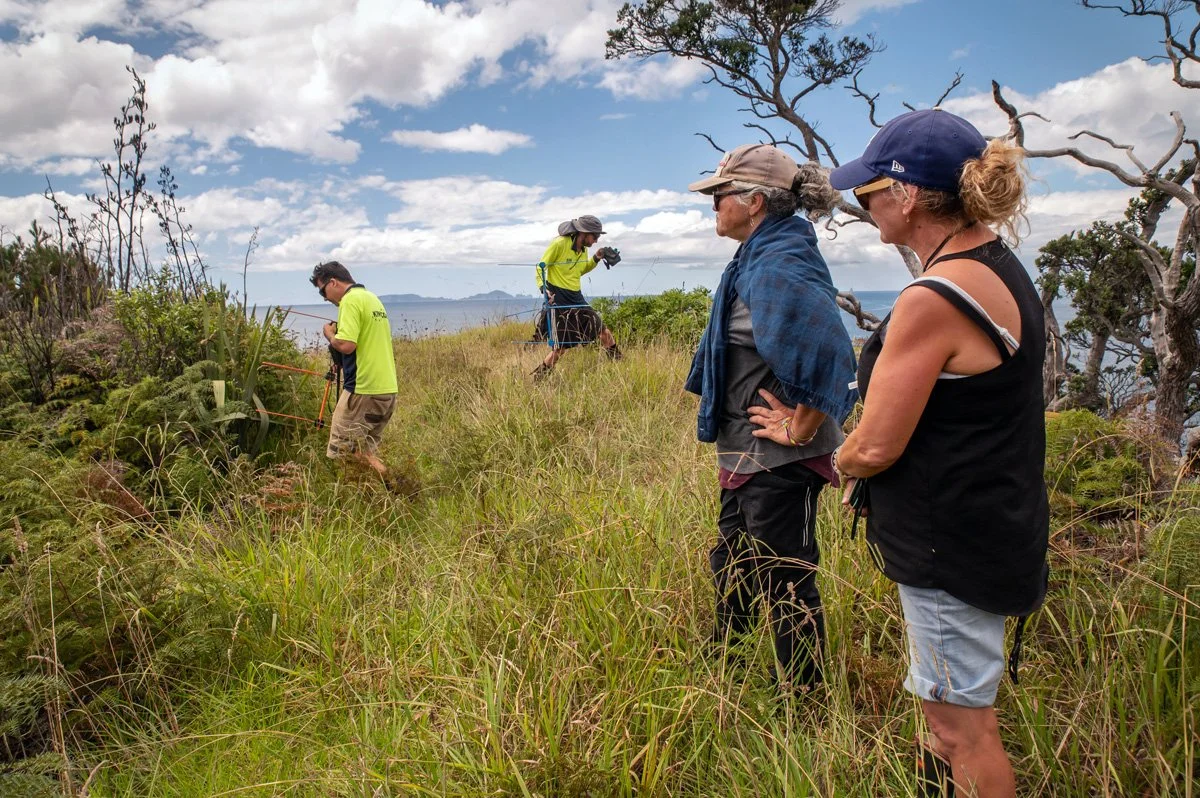
Matapouri locals Dorothy Waetford and Karla Mackie watching TLC trappers Cam McInnes and Dave Trendal hunt for Te Matā on the edge of the Parangarahu block near Matapouri
Eventually data from the radio transmitters confirmed the hatching of a healthy kiwi chick.
Te Wairoa, another of the recently released kiwi has also done the business. In late November after monitoring Te Wairoa’s nesting for nearly 2 months TLC’s accredited kiwi handler Cam McInnes was lucky enough to catch a glimpse of a healthy kiwi chick.
Yeh, two more taonga kiwi roaming free in our precious hinterland.
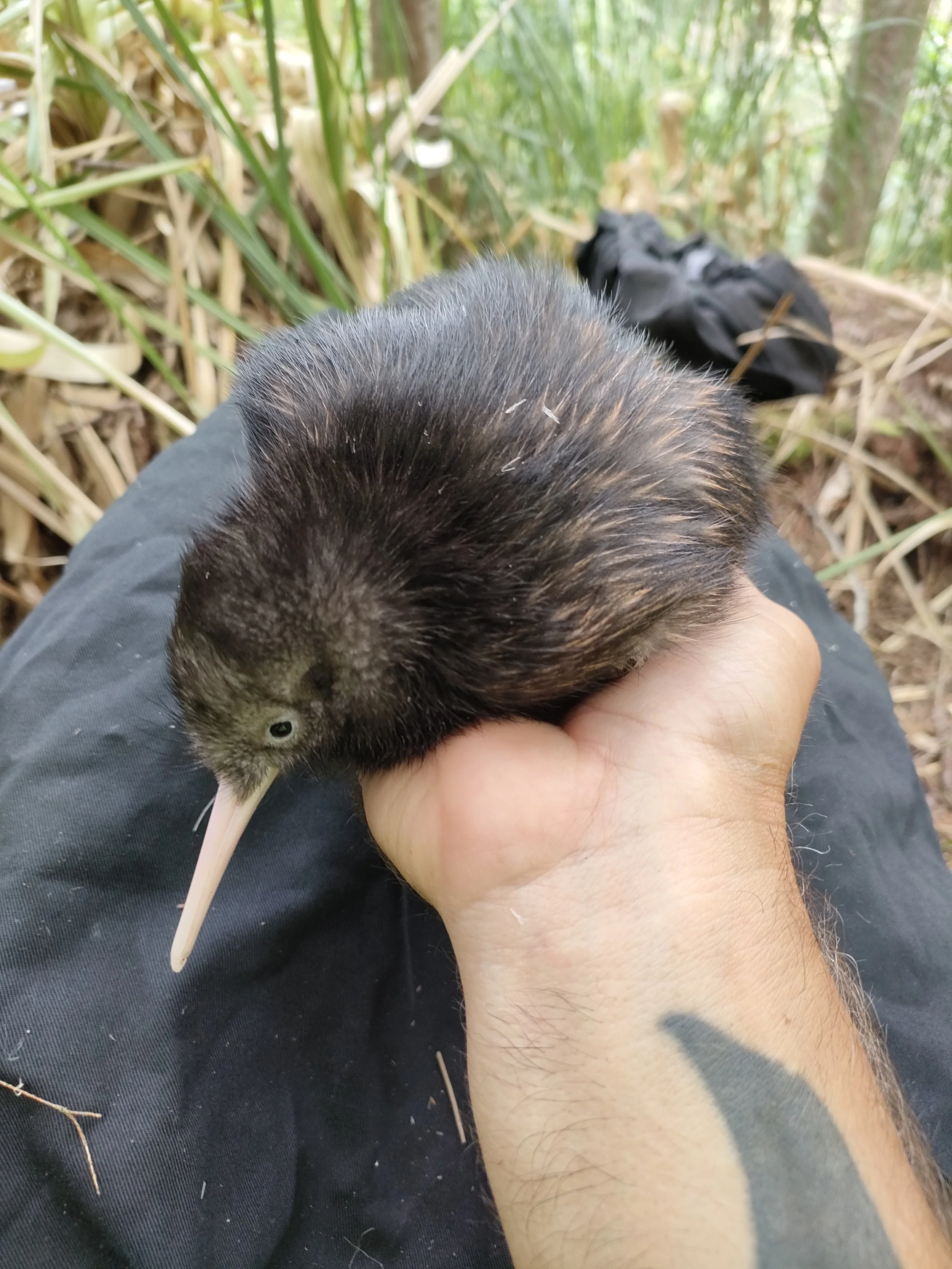
Te Wairoa’s chick held by the caring hands of TLC’s accredited kiwi handler Cam McInnes
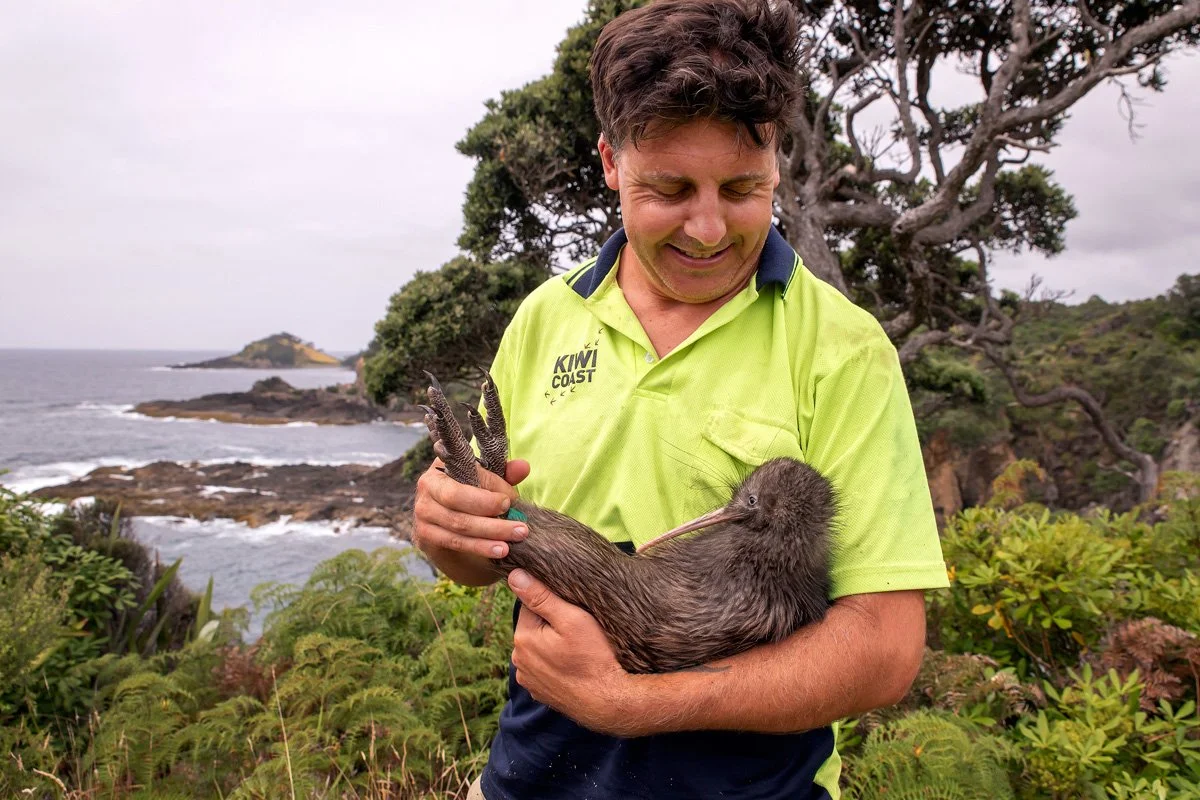
TLC trapper and accredited kiwi handler Cam McInnes holding Te Matā after health check
Of concern: the number of feral cats.
TLC’s trapping crew confirmed 22 feral cat catches in January and February. There were also several reports of volunteer catches.
In bush locations our professional trappers set DOC approved humane kill traps but around built up areas live capture cage traps are used to ensure domestic pets caught out at night can be safely released next morning.
Unfortunately these cage traps require extra work. Animal welfare law requires that they are checked every 24 hours. In comparison we aim to check kill traps within two weeks.
Our stoat catch for these first two months was 38 percent up on the November/December kill, a typical summer surge. Rats, however, were significantly down with the reported kill only 67 percent of the long term average.
It is possible the reasonably large scale rat poisoning in some significant bush areas carried out last winter by TLC volunteers is having some lasting impact. And we must not forget the contribution of all you keen backyard trappers. But rats are such fast breeders that this mahi must be ongoing. Keep up the good work, our birds are coming back.
TLC Advocacy
Tutukaka Landcare hosted the Kiwi Coast Annual General Meeting on 19 December. Kiwi Coast CEO Ngaire Sullivan thanked us and described TLC as a great reminder of what a community conservation project could achieve with enthusiasm, funding and persistence.
“Know your weeds, or guess, and win a prize” was a popular attraction at TLC’s Matapouri Gala Day stall.
In January a marvellous exhibit on dune conservation - posters, pamphlets and real weed samples - featured in our NRC sponsored Dune Conservation workshop at the Ngunguru Hall.
In February TLC held a “Know Your Kiwi” session, also at the Ngunguru Hall. 30 people were captivated by the stories, photos, videos and examples presented by retired veterinarian and kiwi advocate Lesley Baigent
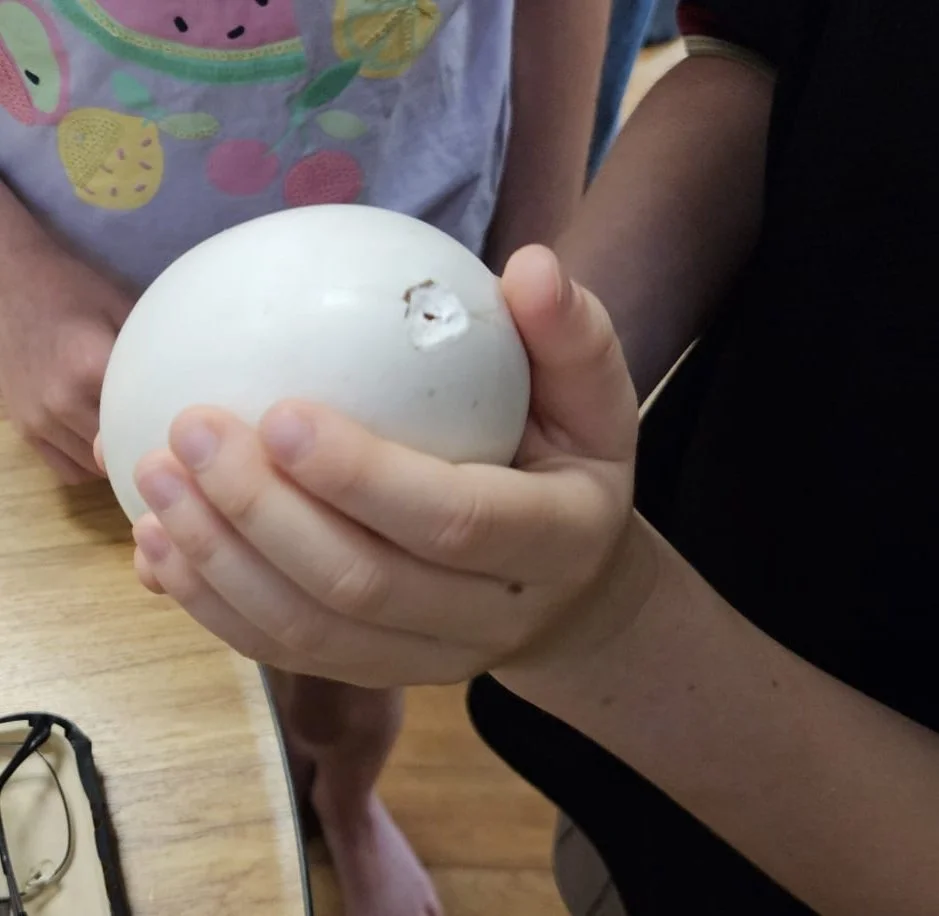
Participants to Know Your Kiwi holding a real kiwi egg shell at Know Your Kiwi workshop held in Ngunguru by Lesley Baigent
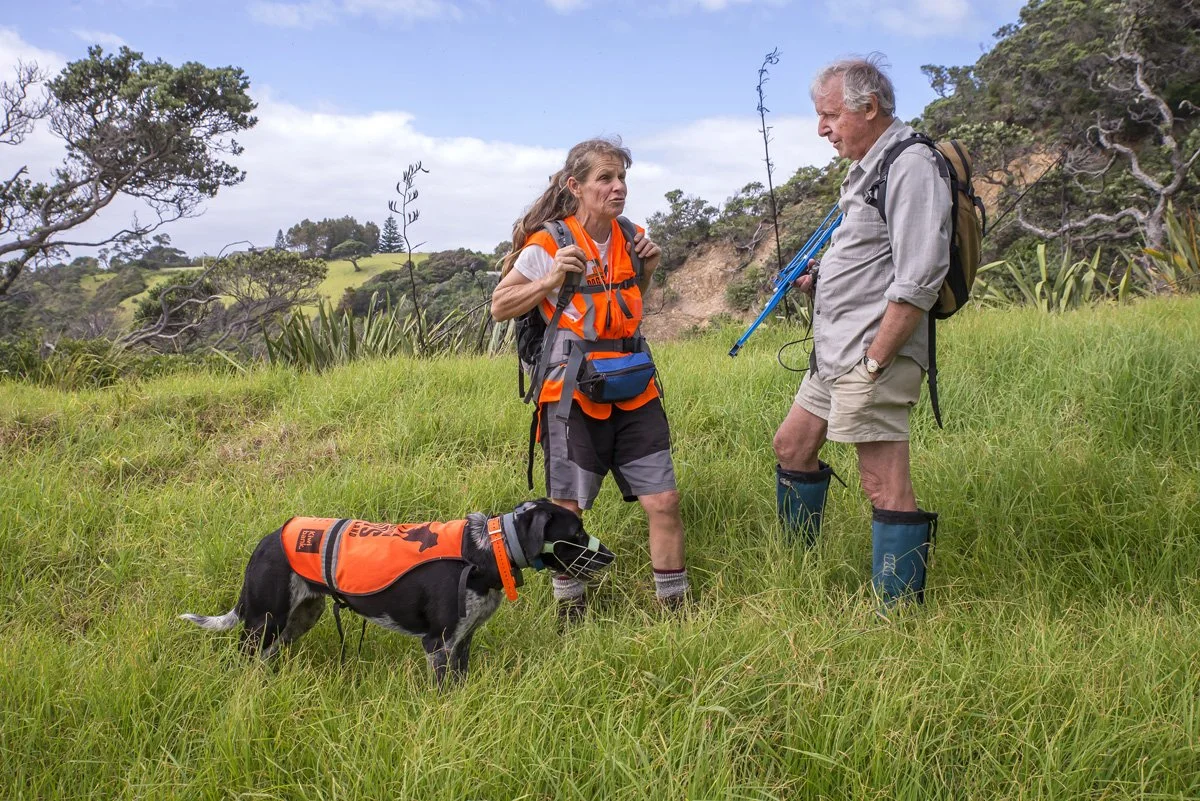
Former veterinarian and passionate kiwi advocate Leslie Baigent with her specially trained ‘kiwi dog' talking to TLC stalwart Mike Camm
Upcoming workshops
Know your Dog, scheduled for April 11th, was postponed du to arrival of cyclone Vaianu. The next Know Your Dog date will be announced soon, by email and social media; Kiwi aversion training, May 16.
TLC strongly recommends that pet dog owners attend a Know Your Dog workshop before enrolling for kiwi aversion training.
Biodiversity Notes
Bat monitoring – ARDs (Automatic Recording Devices) have been deployed to detect bats over the summer-autumn period. This is part of a regional campaign to better understand the habits and habitat of these elusive, nocturnal creatures.
Ducks down at Ngunguru Settling ponds – On 3 January, a large-scale mortality event at the Ngunguru Sewerage Settlement Ponds was reported by Scott Brooks who keeps a regular check on the wildlife there. Dead ducks, including more than 50 pateke, were everywhere. Avian botulism was confirmed. Other birds impacted included paradise ducks, Australian shovelers, mallards, and grey ducks. Unfortunately avian botulism outbreaks are common throughout NZ during warmer weather. In the Waikato and Hawkes Bay around 15,000 birds die from botulism annually. Pateke are anyway already back in the ponds and breeding!
Weeding
In addition to SWAT’s regular “Weedy Wednesdays” TLC volunteers have been dealing to highly invasive willows in Kiripaka and papyrus in Ngunguru - on both council and private land.
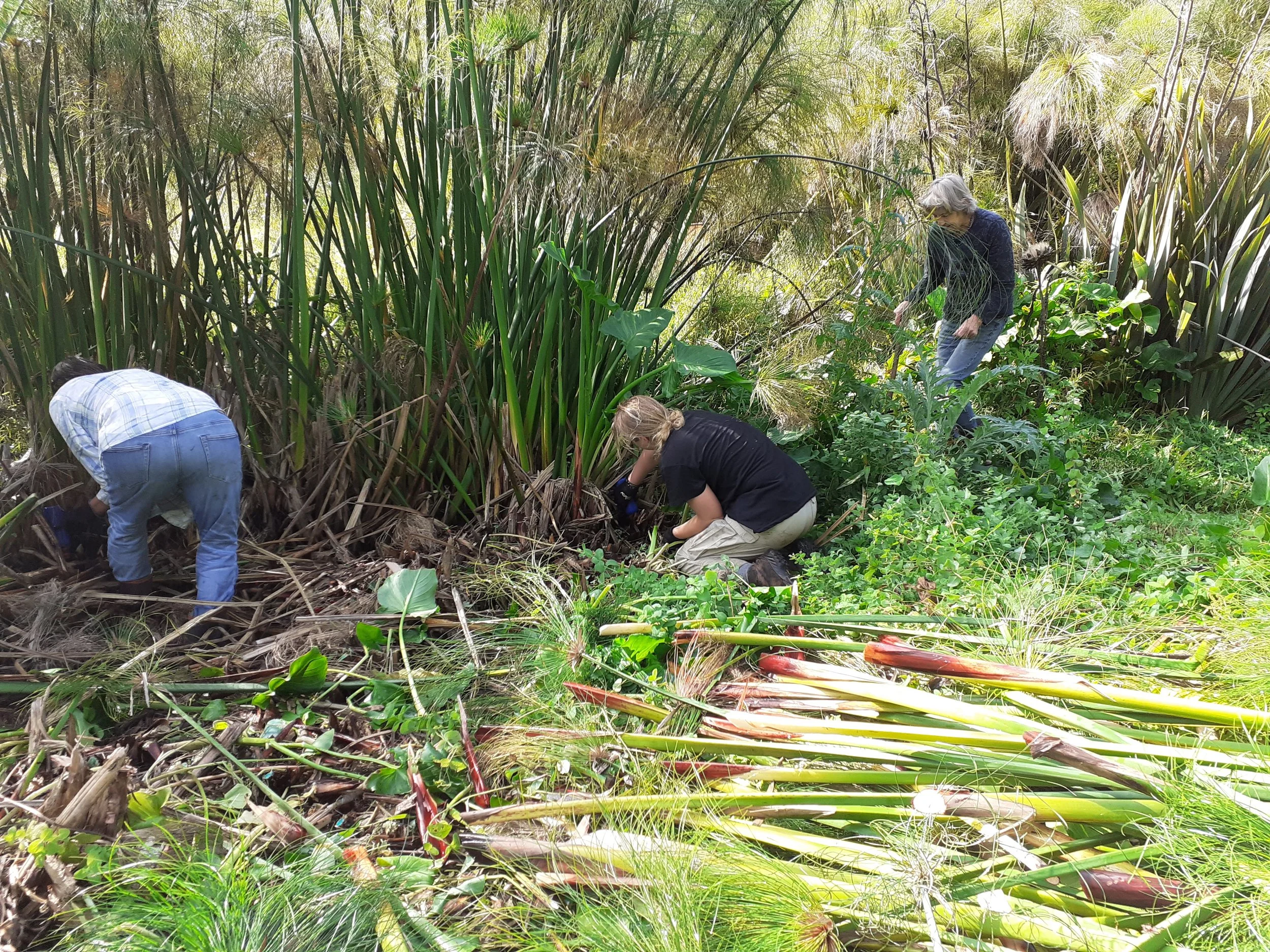
S.W.A.T. Tutukaka team attacking a large clump of invasive papyrus clogging waterways in Ngunrguru
Moth plant has been targeted on sites across the district. Moth plant is an invasive cunningly camouflaged tree strangler that makes an annual mistake. It bursts out every new year with pretty white flowers to reveal itself for a SWATing. SWAT Tutukaka team has been collecting cut and pasted stems, seedlings and several hundreds of moth pods to participate to the national Moth plant competition.
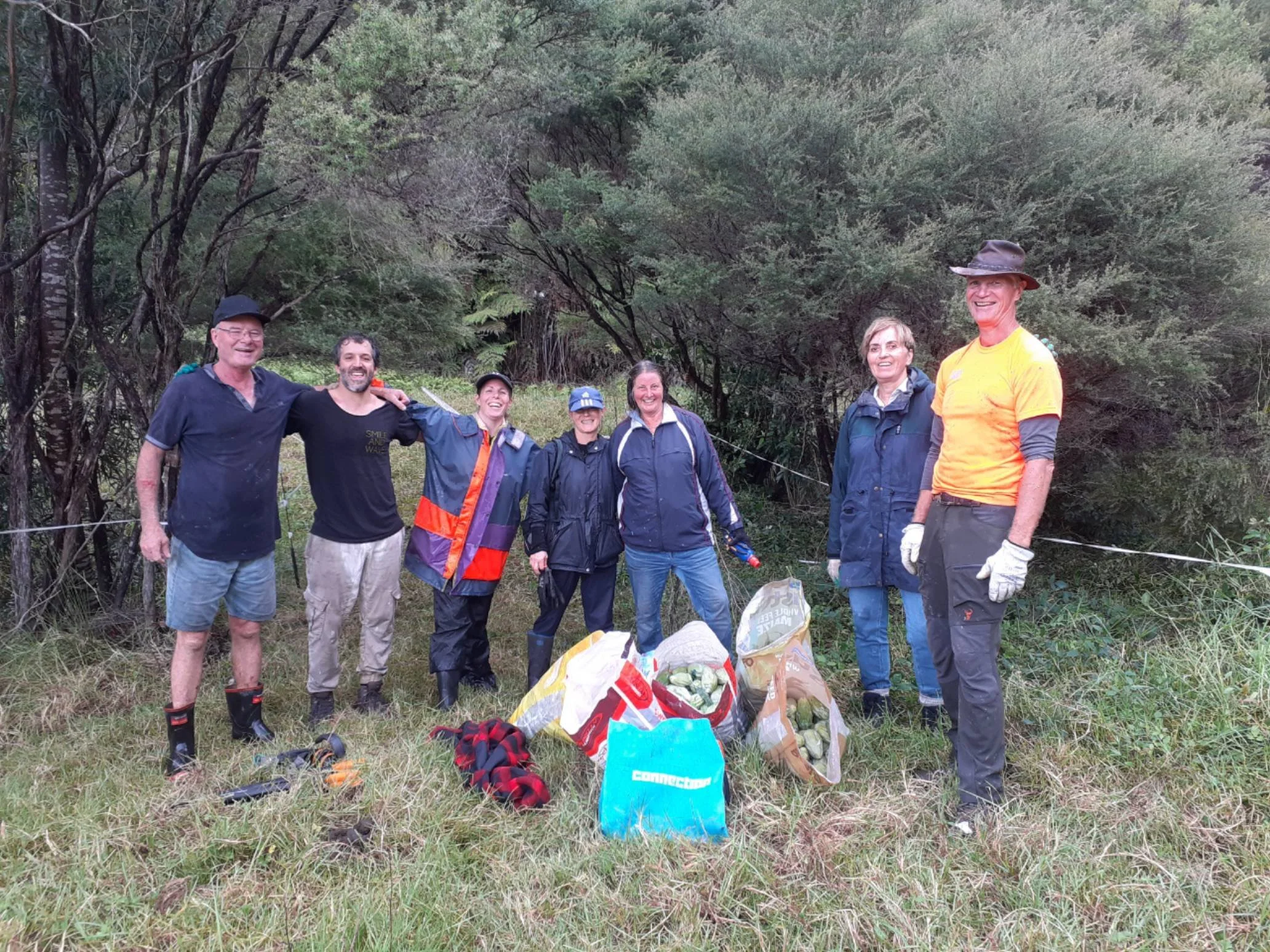
S.W.A.T. Team wet and sweaty after a huge mission on moth plants in Matapouri
We have also been attacking ginger, both directly and with advice to locals. Ginger is also more visible in the summer with its display of large red or orange flowers.
And for our highlight reel - a weeding event at Snell’s reserve in Ngunguru attended by 47 students and 6 teachers from Huanui College.